 Sokosuite Blog
A plate of Ugali Nyama at KES 200 can leave you only KES 28. This guide sets up chai, a pot of nyama na supu and the Ugali Nyama plate in Sokosuite, cooks the pot, sells a plate and checks the books, with a screenshot at every step. It takes about 15 minutes.
What you will set up
| Recipe | How it works |
|---|---|
| Chai (sufuria) | Made in batches · 20 cups · KES 18.80 a cup |
| Nyama na supu (sufuria) | One pot, two products · 25 portions of nyama + 30 ladles of supu |
| Ugali Nyama | Made when sold · KES 200 · 1 ugali + 1 nyama + 1 ladle of supu |
Before you start: A recipe can only use items that already exist under Inventory → Stock Items. Add your ingredients (milk, tea leaves, sugar, beef, onions, tomatoes, cooking oil, maize flour) and the things your kitchen makes (Chai per cup, Nyama per portion, Supu per cup) first.
Tip: Paying staff a monthly salary? Leave Labour at 0 in every recipe and record salaries once a month as an expense: a salary is the same whether you cook one sufuria or ten. Charcoal and gas are different, every pot burns them, so put them in Other costs.
Part 1: Chai (sufuria)
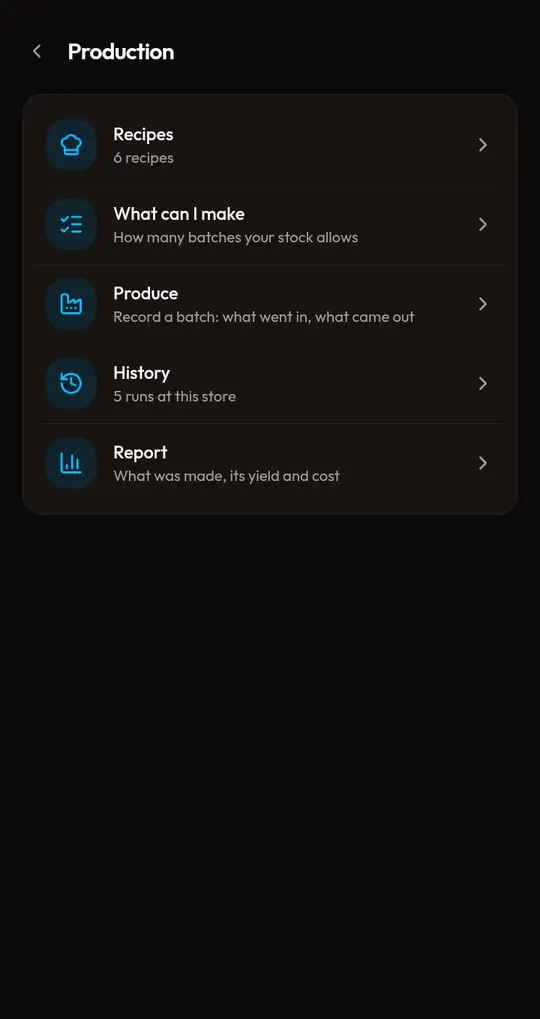
1. Open Production
Tap Inventory at the bottom, then Production.
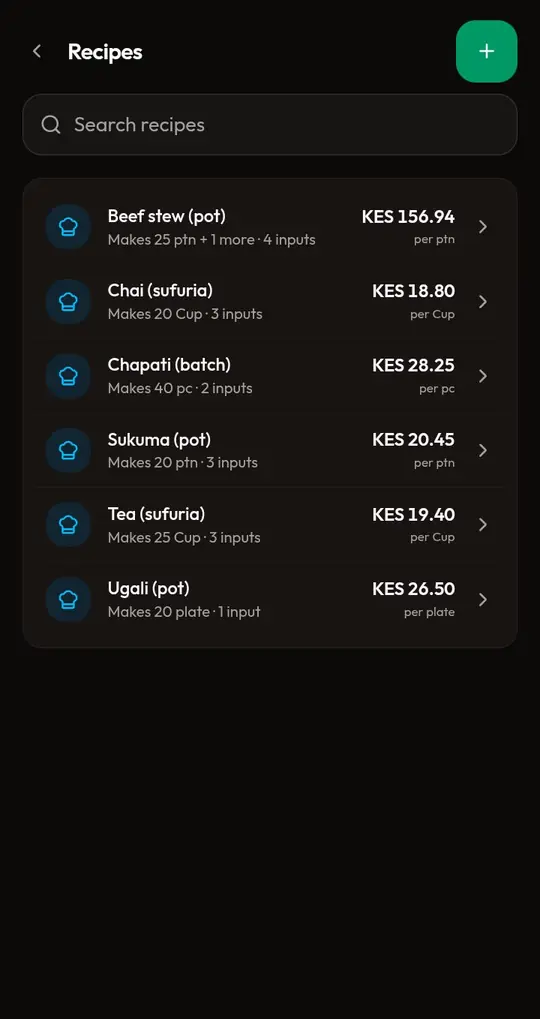
2. Open Recipes and tap +
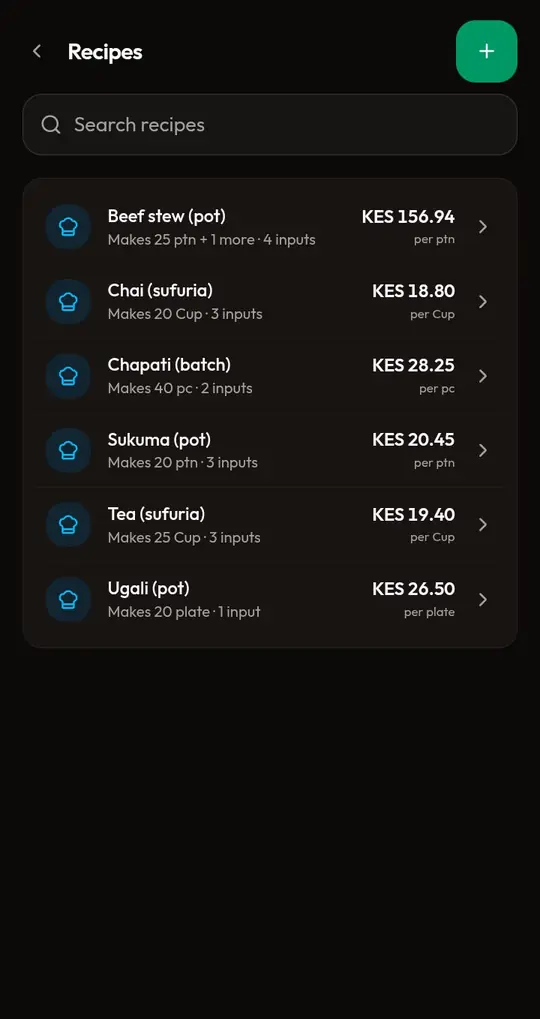
The list shows every recipe, what one batch makes and the cost of each unit. Tap the green +.
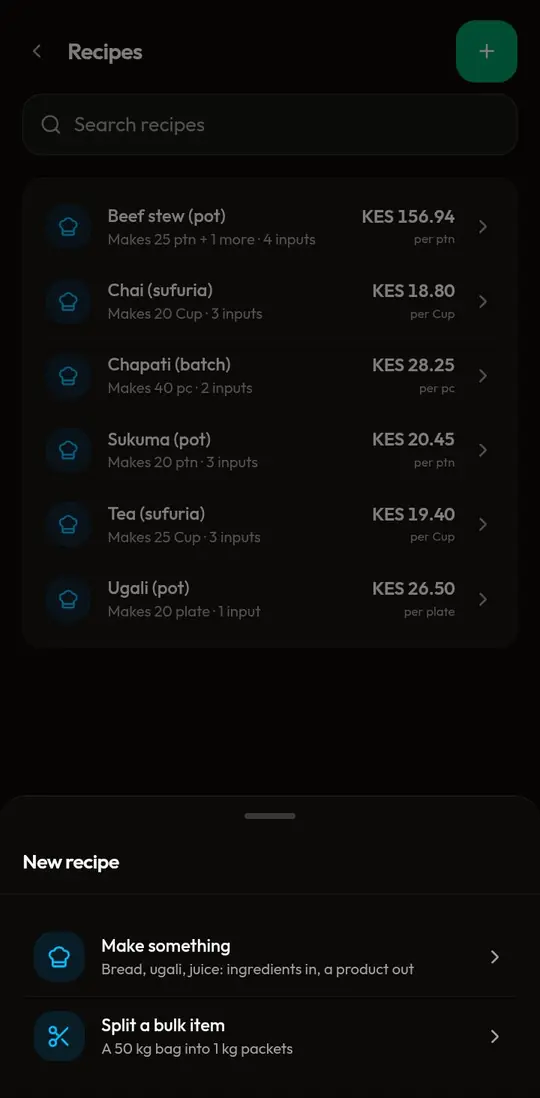
3. Choose “Make something”
Chai is ingredients in, a product out. (Split a bulk item is for repacking, like a 50 kg sack into 1 kg packets.)
4. Name it, made in batches
Type Chai (sufuria). Chai is cooked ahead and served from the sufuria, so keep Made in batches.
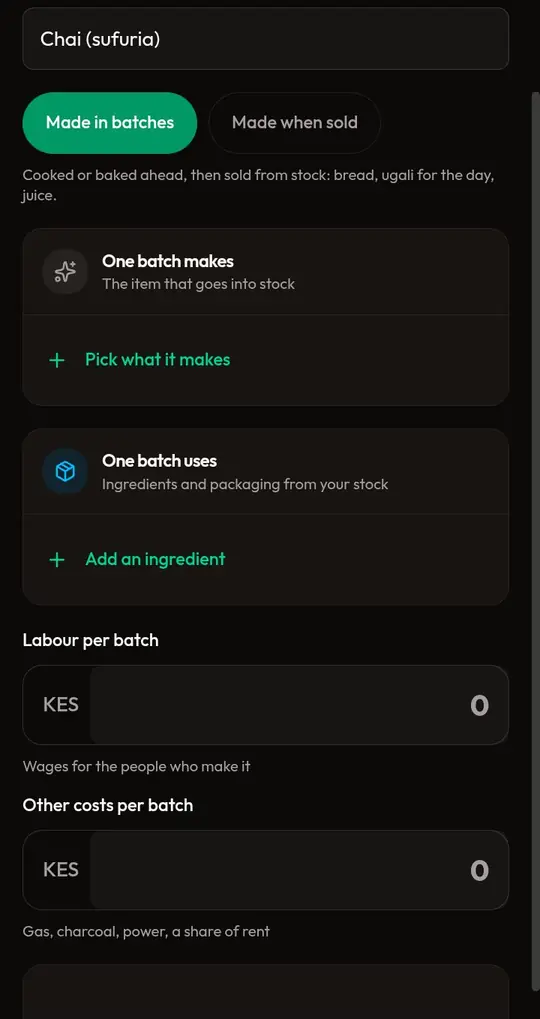
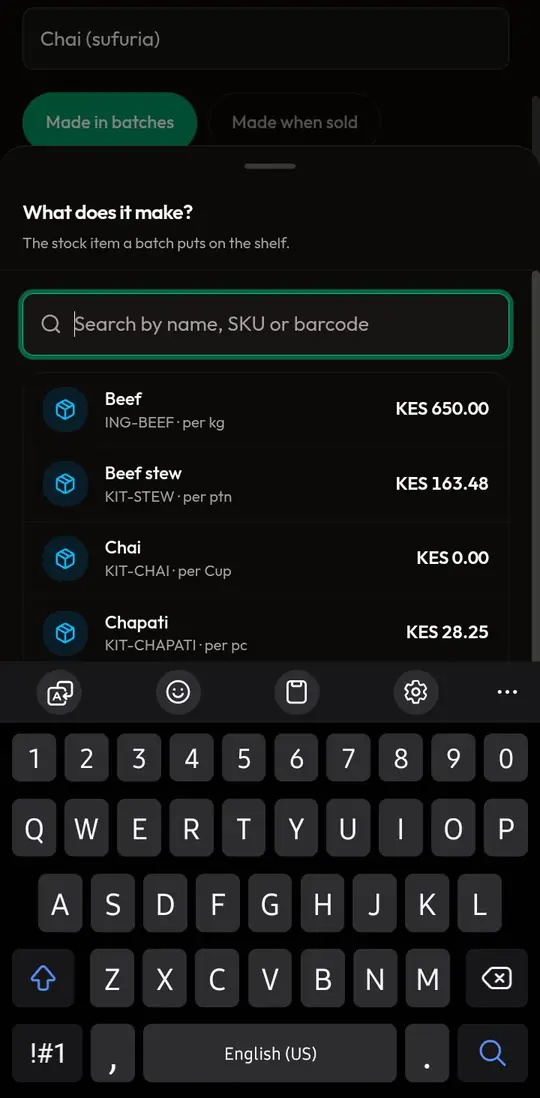
5. Pick what it makes
Tap Pick what it makes and choose Chai (per cup).
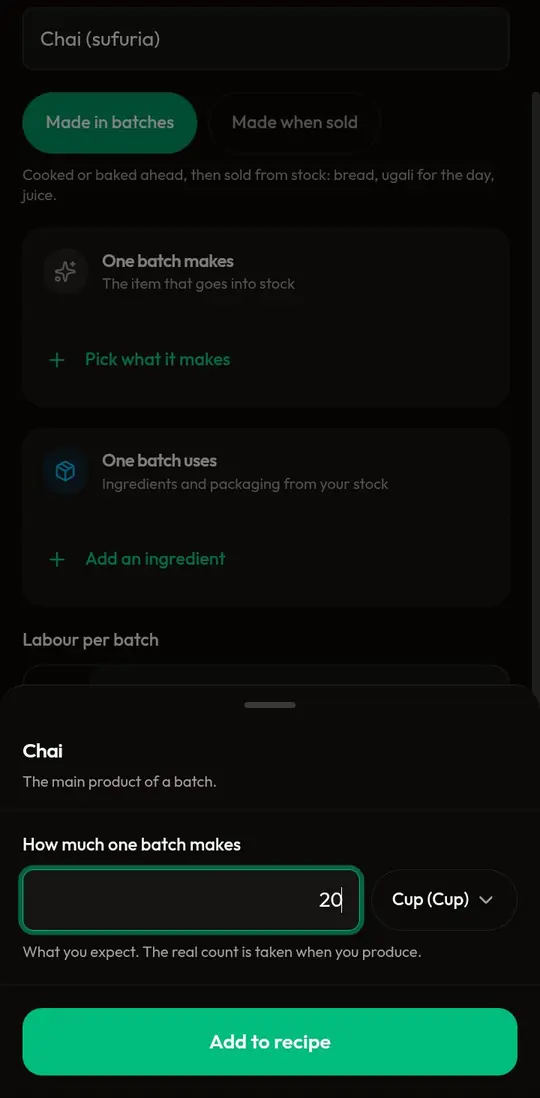
6. How much one sufuria makes
Type 20 cups and tap Add to recipe. This is what you expect; the real count is entered each time you cook.
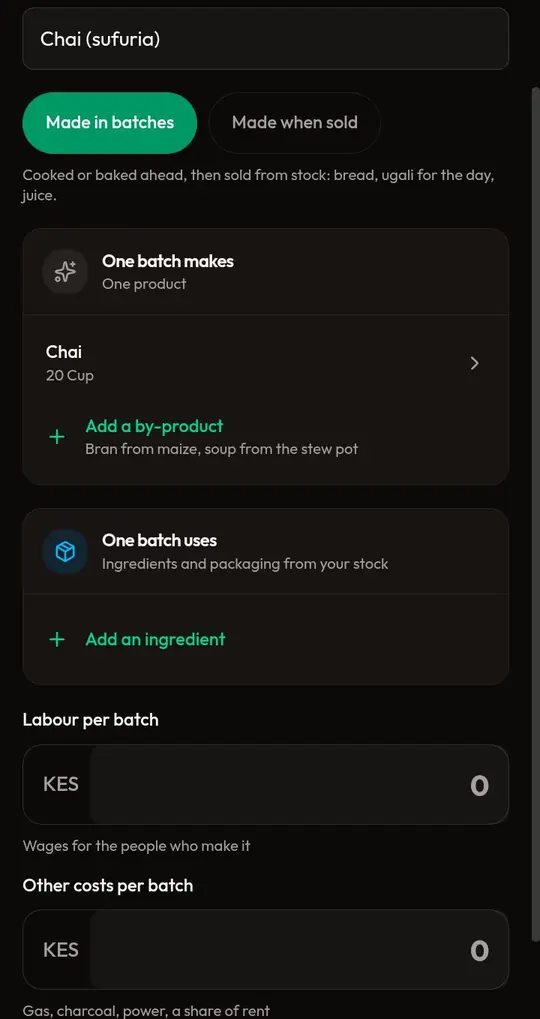
7. Add the ingredients
Under One batch uses, tap Add an ingredient.
8. Search and pick
Type Milk and tap it.
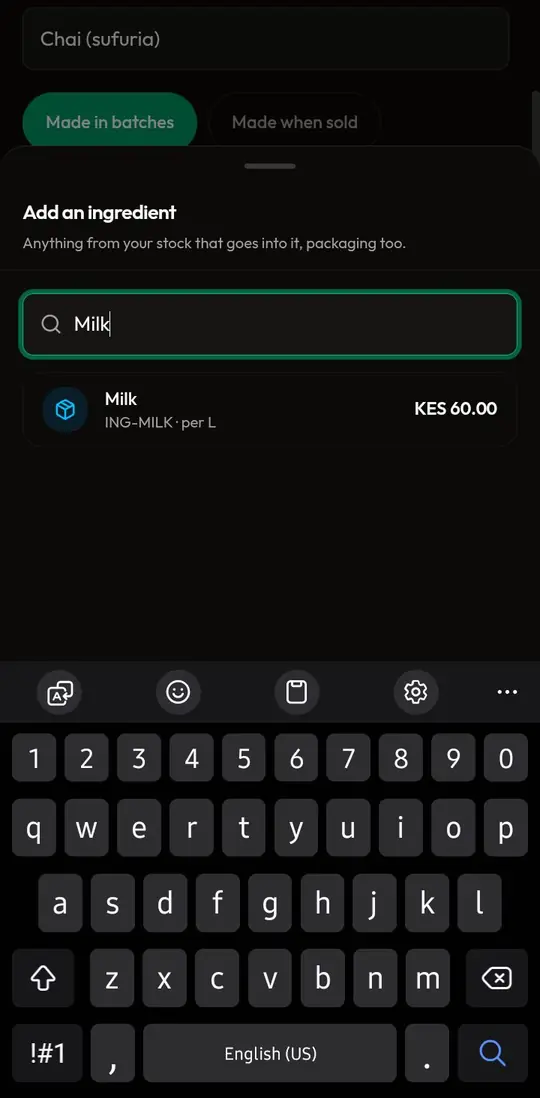
Careful: Pick carefully: Tea (a cup your kitchen makes) and Tea leaves (bought, per kg) look alike. Check the unit under the name. Picked the wrong one? Tap its line and choose Remove from recipe.
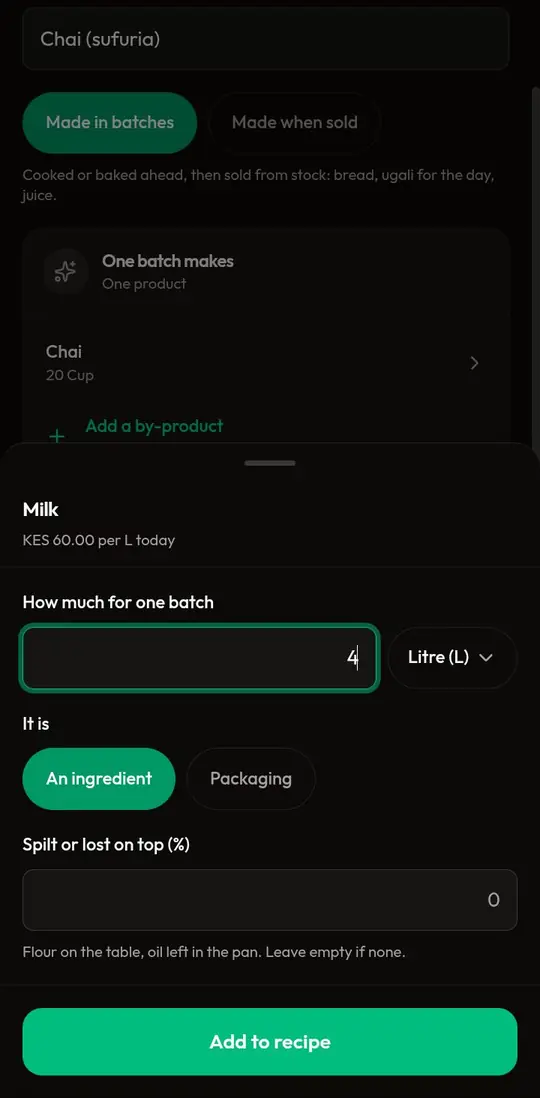
9. How much one batch uses
Milk 4 litres, An ingredient, then Add to recipe. Do the same for Tea leaves 0.06 kg (60 g) and Sugar 0.4 kg.
10. Labour 0, fuel 40
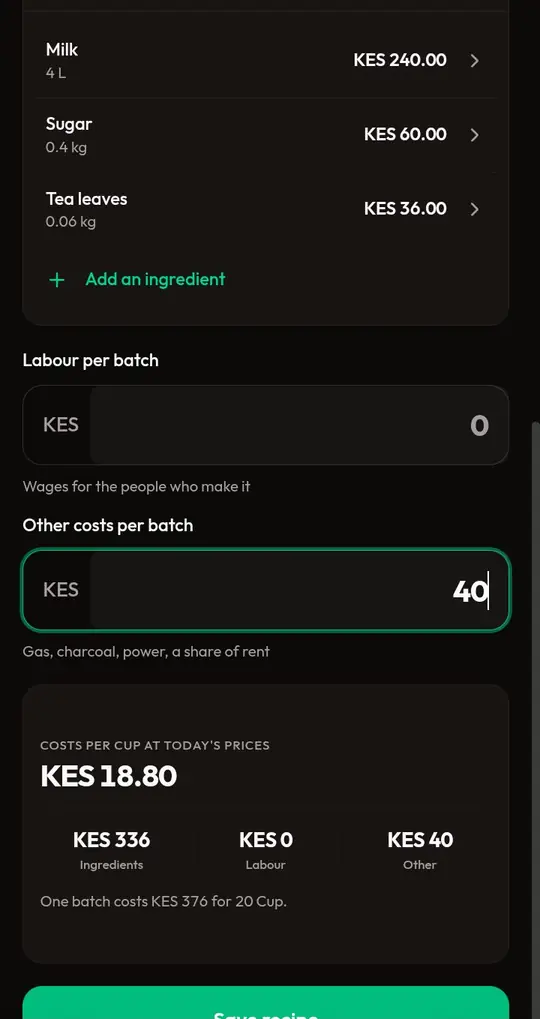
Leave Labour per batch at 0. Put the charcoal or gas for one sufuria in Other costs per batch: 40.
The cost works itself out: KES 18.80 a cup (ingredients 336 + fuel 40 = 376 for 20 cups). Tap Save recipe.
11. Saved
Chai (sufuria): makes 20 cups, 3 inputs, KES 18.80 a cup.
Part 2: Nyama na supu: one pot, two products
Start a new recipe the same way, name it Nyama na supu (sufuria), made in batches, and pick Nyama, 25 portions, as what it makes.
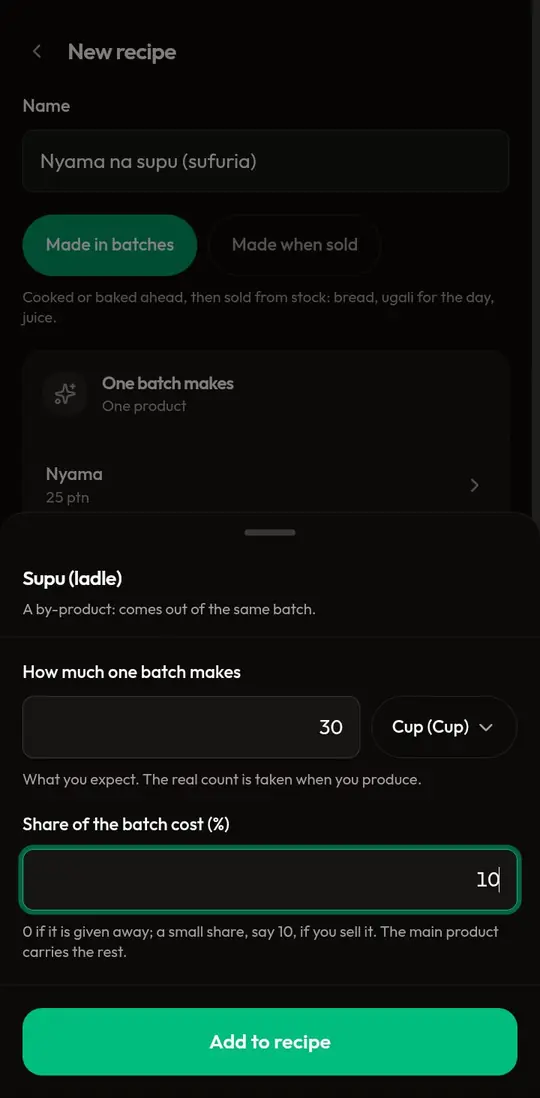
12. Add the supu as a by-product
Tap Add a by-product, pick Supu, type 30, and give it 10% of the batch cost. The nyama carries the other 90%: the supu comes from the same pot, but most of the value is in the meat.
13. Add the ingredients
Beef 5 kg, Onions 1 kg, Tomatoes 1.5 kg, Cooking oil 0.3 L.
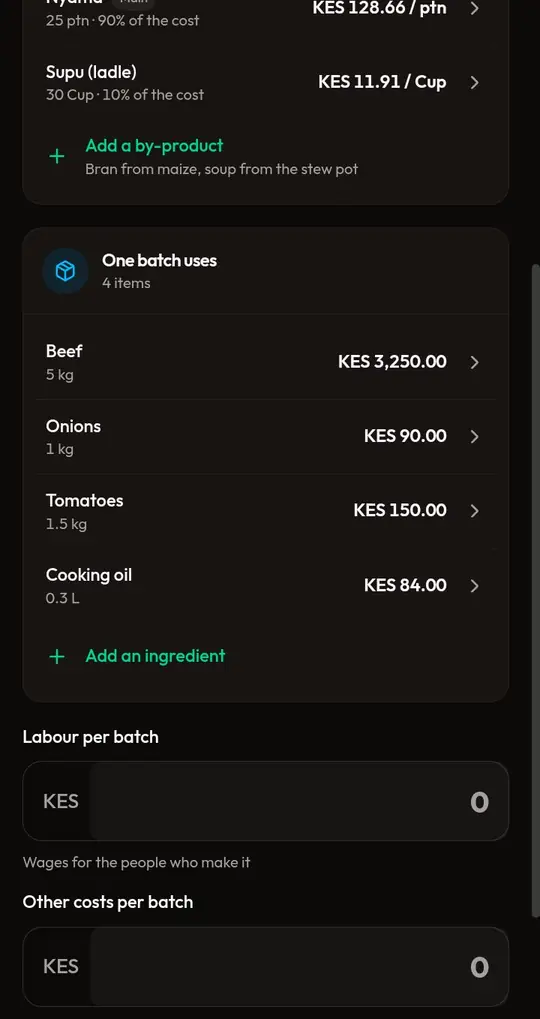
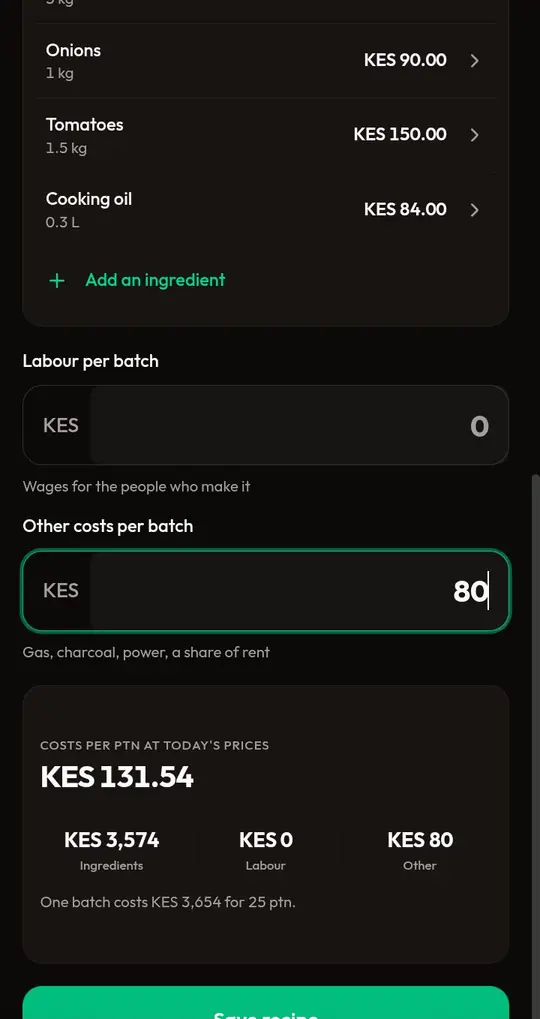
14. Labour 0, fuel 80, save
The pot simmers for hours: fuel 80. Nyama comes to KES 131.54 a portion and supu KES 12.18 a ladle. Tap Save recipe.
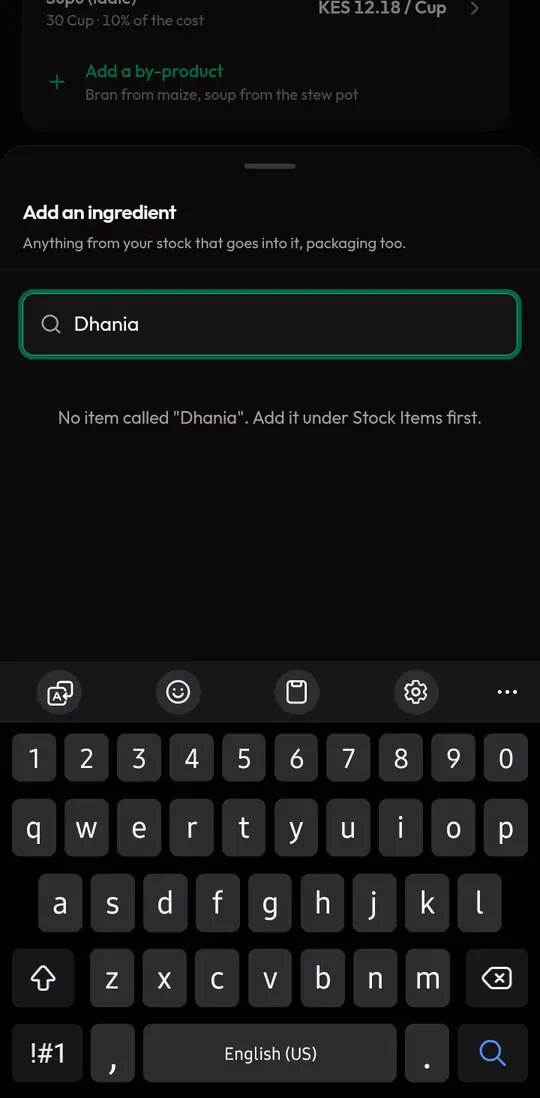
15. An ingredient that is not in stock
Searching for something you have never stocked, like Dhania, says to add it under Stock Items first. Close the sheet by flicking it down, save, add the item under Inventory → Stock Items, then come back and add it.
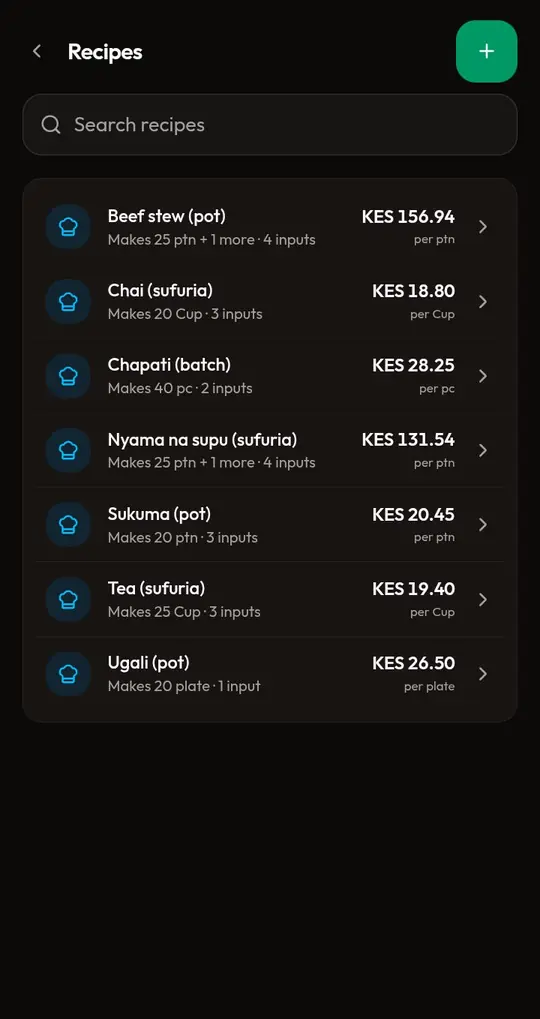
16. Saved
Nyama na supu (sufuria): 25 portions plus a second product, KES 131.54 a portion.
17. Check the ugali pot
If an existing recipe charges labour per pot, open it, set Labour per batch to 0 and tap Save changes. Here ugali drops from KES 26.50 to KES 19.00 a plate.
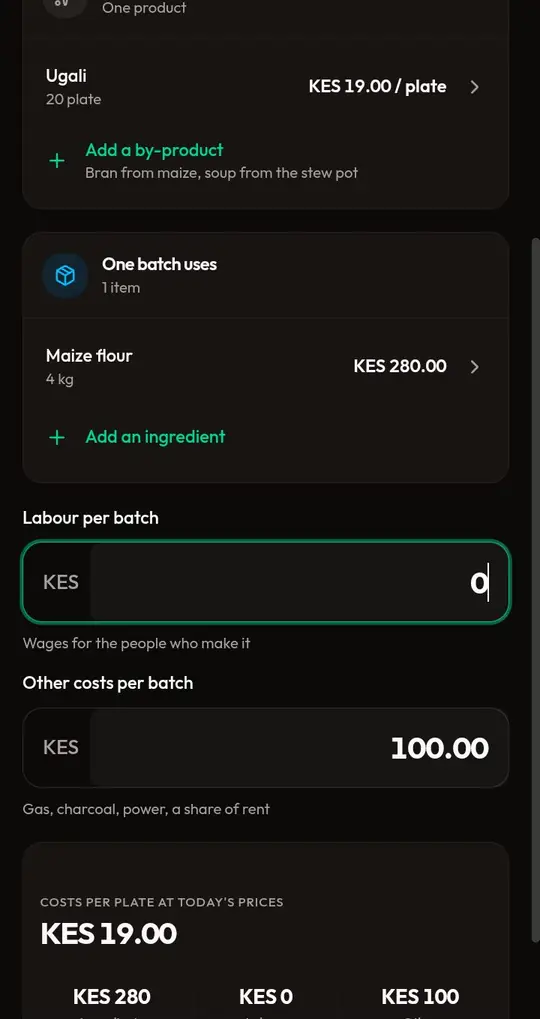
Part 3: Ugali Nyama on the menu
18. Made when sold
New recipe → Make something → name Ugali Nyama → tap Made when sold: the plate is put together when someone orders it, and each sale takes its parts off stock.
Add Ugali 1 plate, Nyama 1 portion and Supu 1 ladle, with no labour or fuel (the pots already counted those), and save.
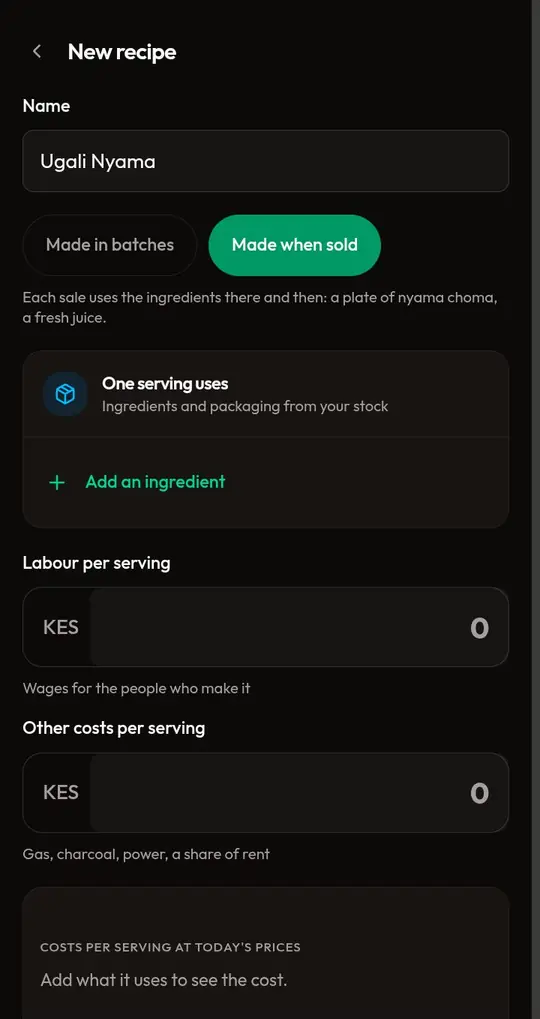
Careful: Nyama and supu show KES 0 until you record the first pot under Produce (next part): costs come from real cooking.
19. Sell it at the till
Open Ugali Nyama again and, under At the till, tap Sell it at the till.
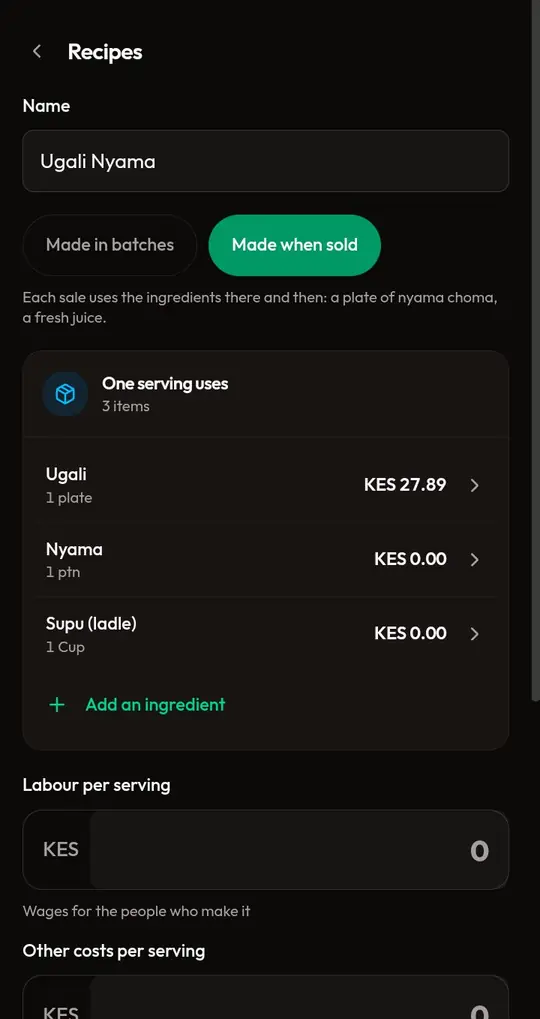
20. Name and price
The name is filled in. Type the price, 200, check it, and tap Put it on the till.
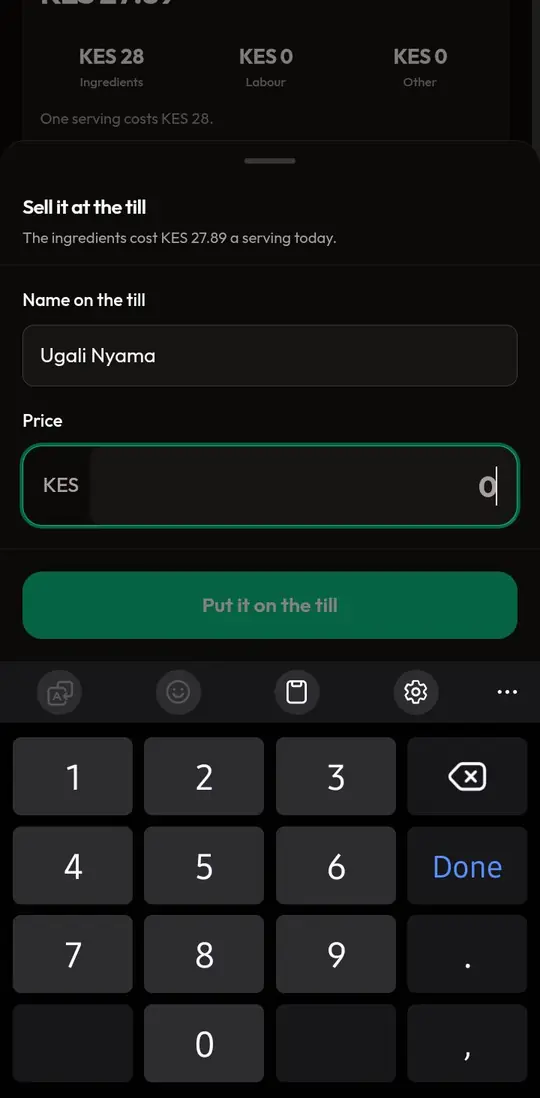
Part 4: Cook the pot (Produce)
21. Record the pot
Production → Produce, pick Nyama na supu, 1 batch. It shows what the pot uses, what is in stock and what it should make. Used more beef or got fewer portions? Tap the row and enter what really happened.
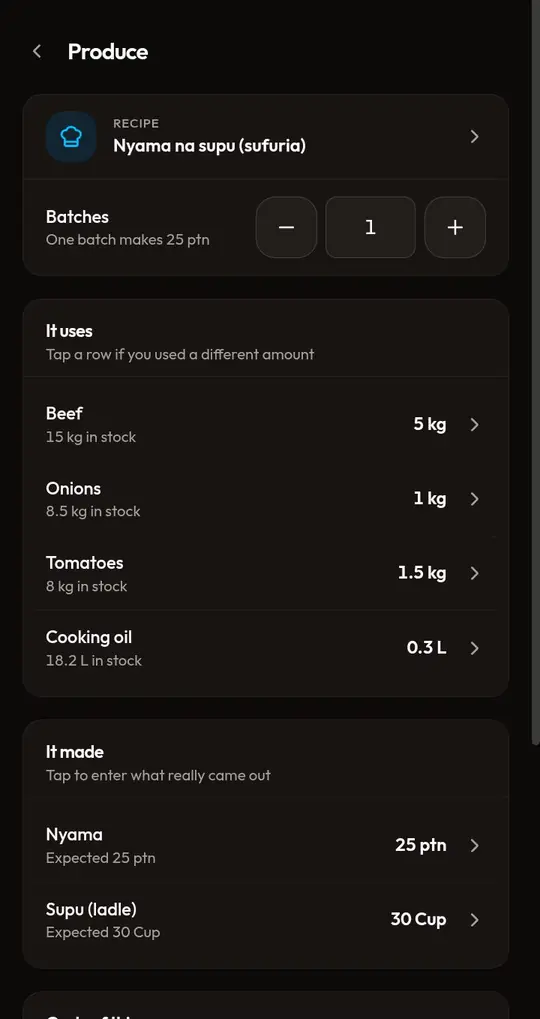
22. Tap Produce
Labour 0, fuel 80. Tap Produce.
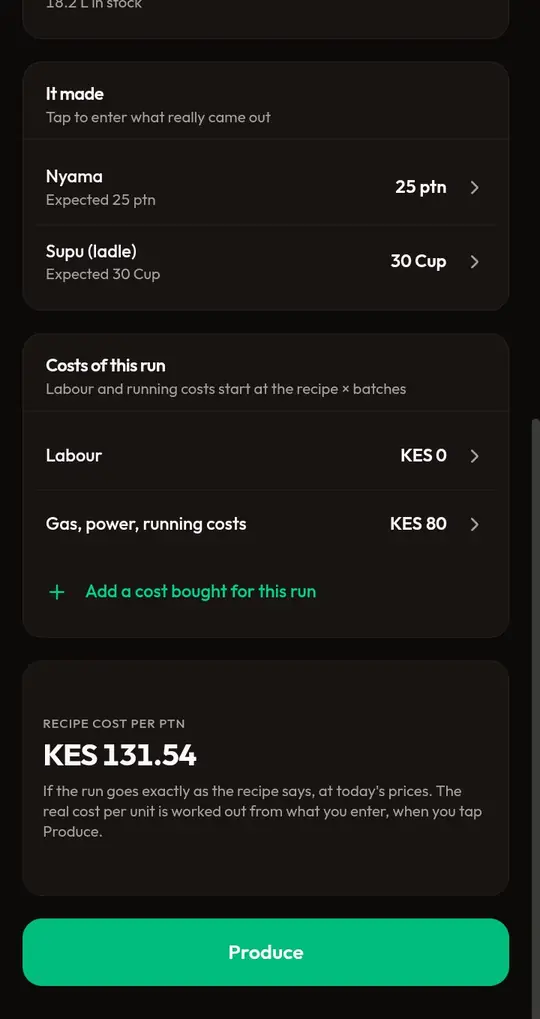
23. Stock and cost are updated
25 portions of nyama at KES 131.54, 30 ladles of supu at KES 12.18. The beef, onions, tomatoes and oil come off stock.
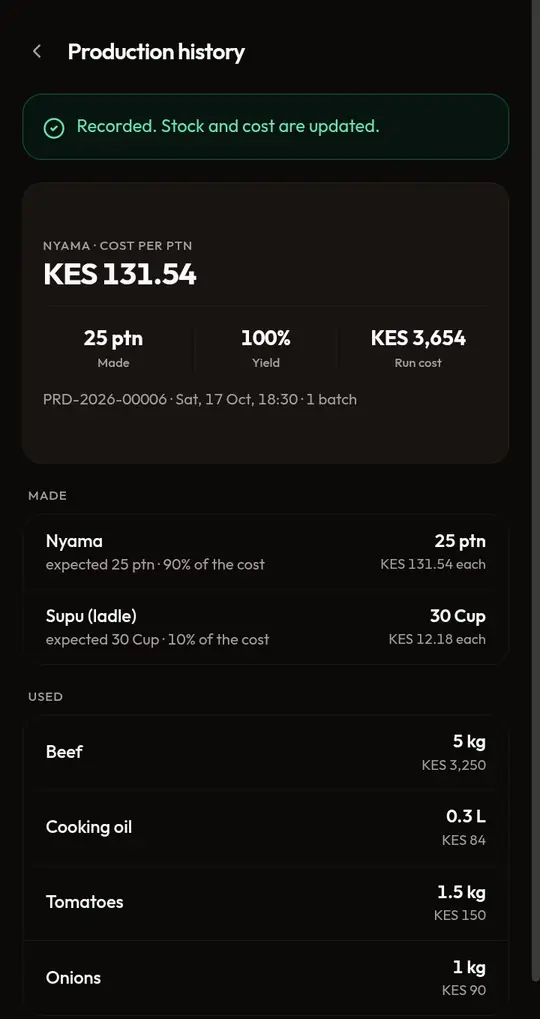
24. The plate’s real cost
Ugali Nyama now costs about KES 171.60 to make: ugali 27.89 + nyama 131.54 + supu 12.18. At KES 200 that is only 14% over ingredients (see “What the numbers say” at the end).
Ugali shows 27.89, not the 19.00 from its recipe: the till uses the average of the ugali already in stock, cooked before labour was set to 0. It falls as you cook new pots.
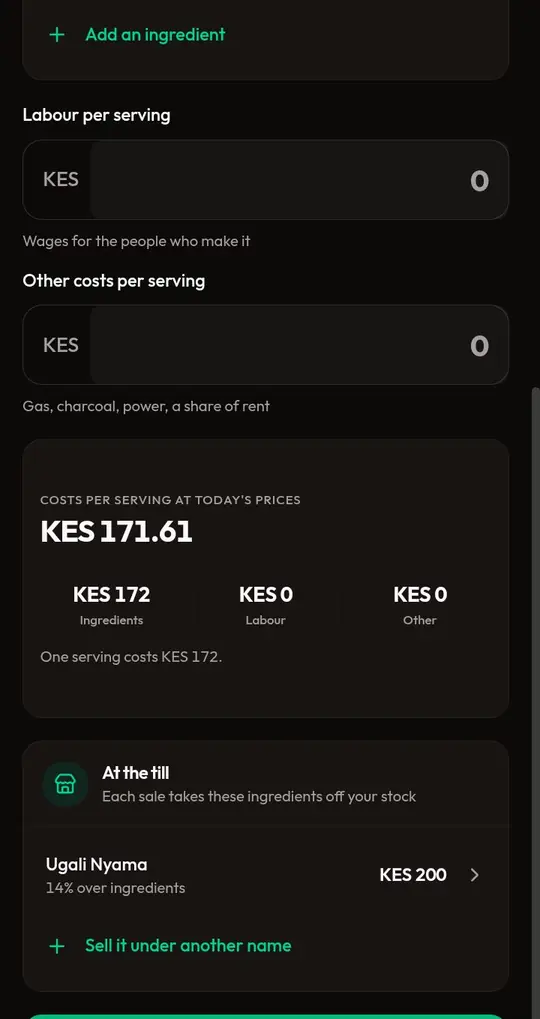
25. On the till
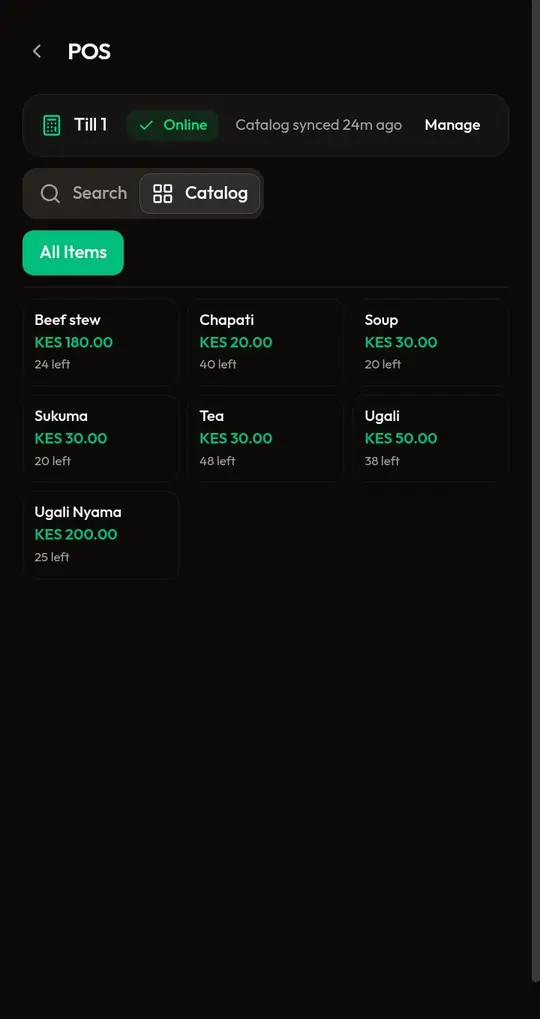
Ugali Nyama, KES 200, 25 left: the till counts how many plates your stock can make (25 nyama, 30 supu, 38 ugali → 25).
Part 5: Sell a plate and check the books
26. Ring it up
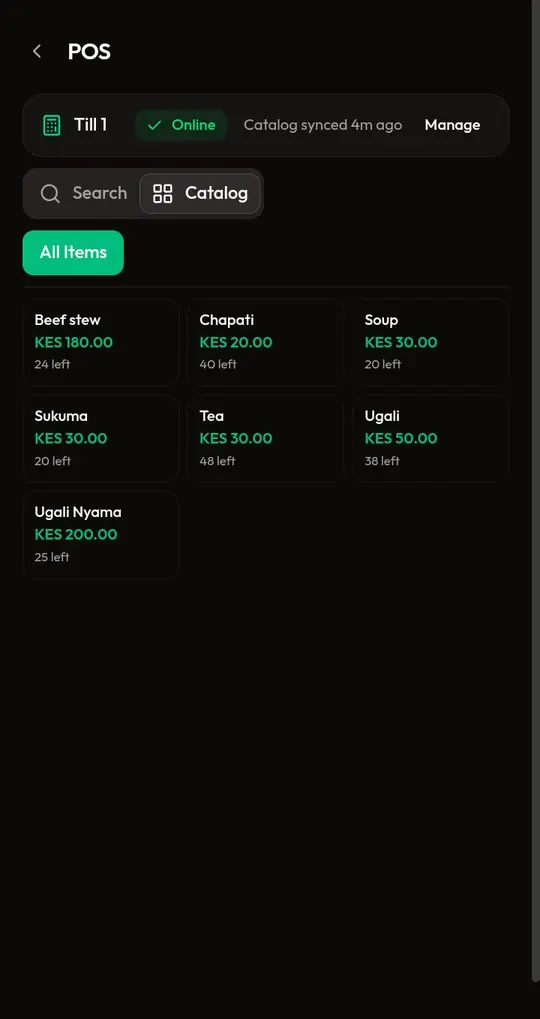
On the POS, tap Ugali Nyama once, then Pay.
27. Take the cash
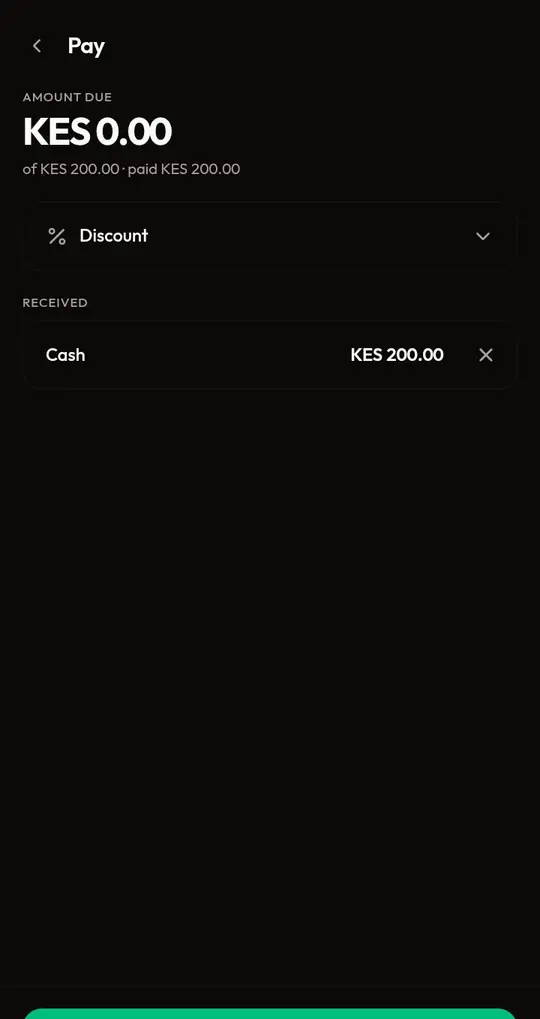
Cash, tap Exact KES 200.00, then Complete sale.
28. The receipt
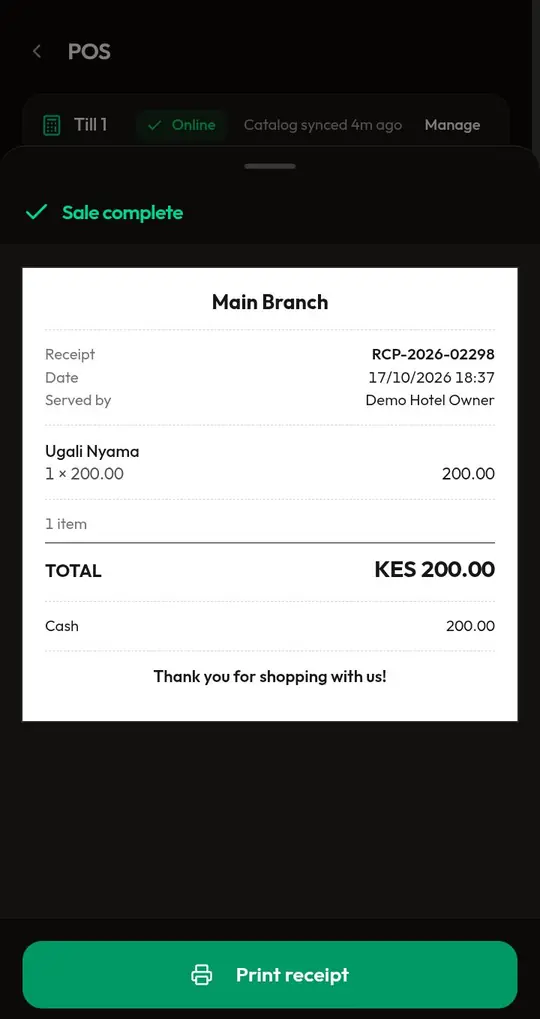
Print it, send it on WhatsApp, or tap New sale for the next customer. Stock drops by one nyama, one supu and one ugali.
29. Reports
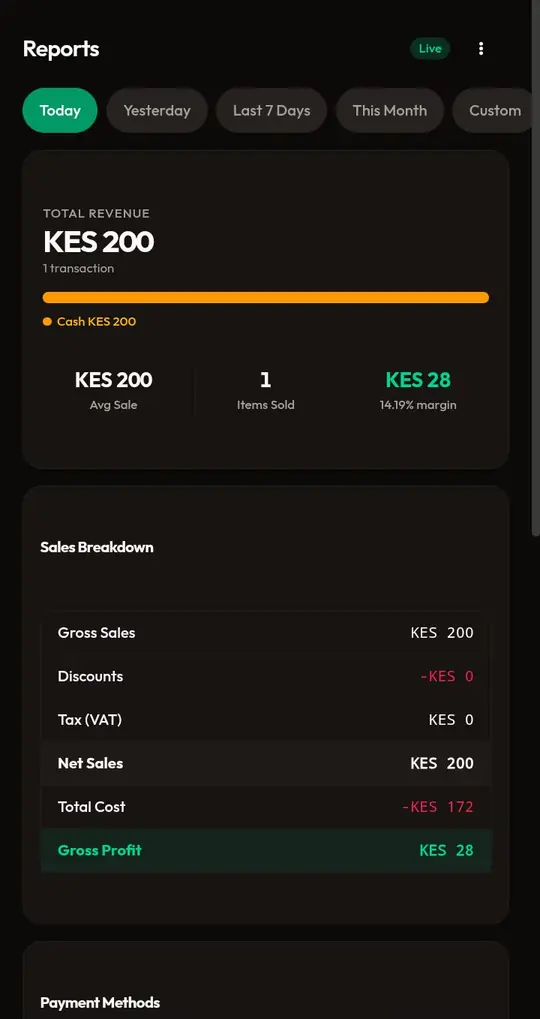
Reports → Today: revenue KES 200, cost KES 172, gross profit KES 28, and Ugali Nyama as top seller.
30. The books keep themselves
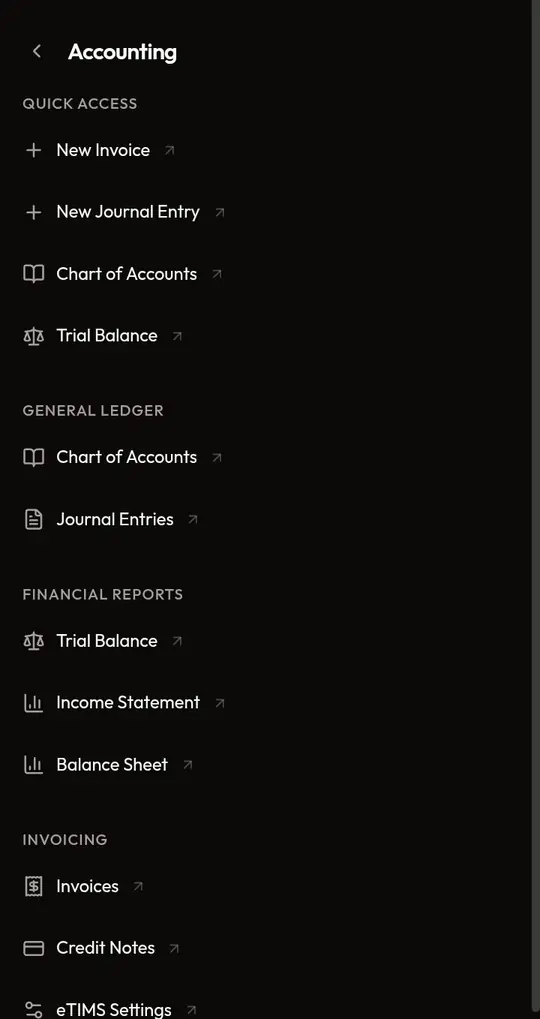
Every sale and every pot posts to the accounts on its own. Open More → Accounting → Journal Entries to see them.
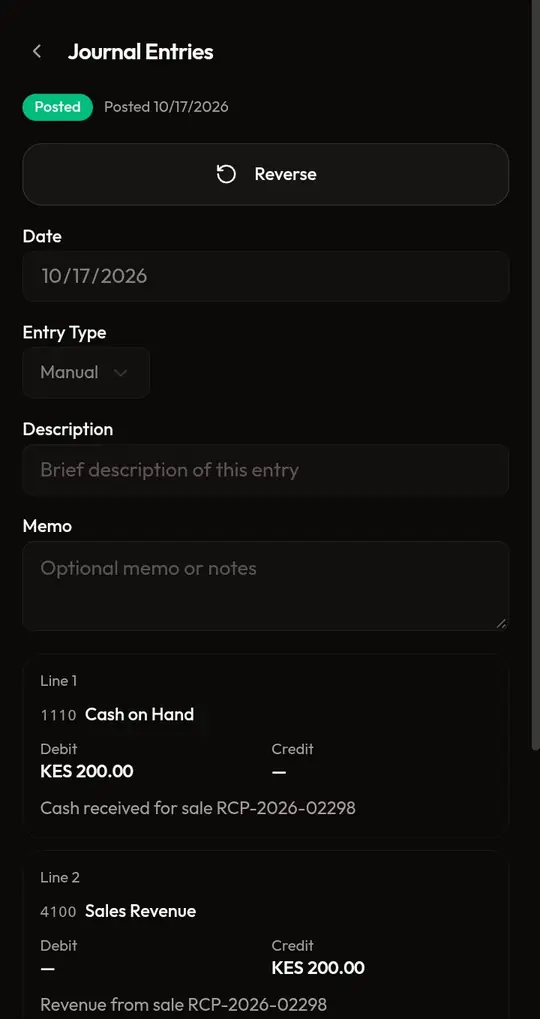
31. The sale in the books
Cash 200 in, sales 200; cost of goods sold 171.62 (the same plate cost, rounded to the cent), taken out of stock. Debits and credits balance.
Tip: To undo a sale, void it from Sales history: the stock, the report and the books all follow.
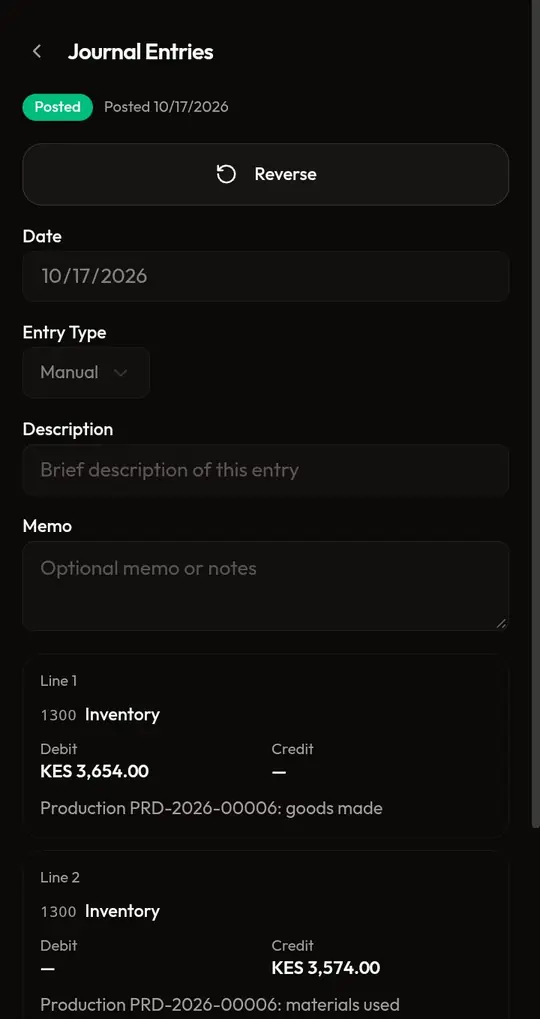
32. The pot in the books
Food made 3,654 into stock, ingredients used 3,574 out of stock, and the 80 of fuel moved into the food’s cost.
33. Trial balance
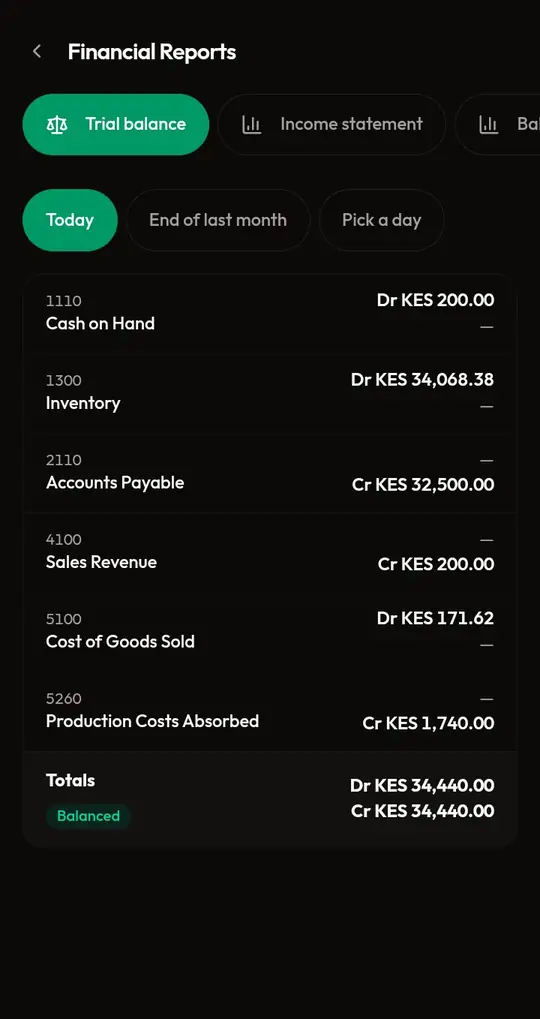
Accounting → Trial Balance: debits equal credits, Balanced.
What the numbers say
- Ugali Nyama makes little at KES 200: a 200 g portion (5 kg ÷ 25) at KES 650 a kilo is KES 130 of beef alone. Cut 30 portions from the pot (the plate drops to about KES 150) or price it at KES 230 to 250.
- Record the charcoal and gas you buy, and the monthly salaries, as expenses. The fuel in your recipes is already inside the food’s cost, and Sokosuite makes sure it is not counted twice.
- To sell chai, add a product Chai at your price that sells from the Chai stock item, then record a sufuria under Produce each time you cook.